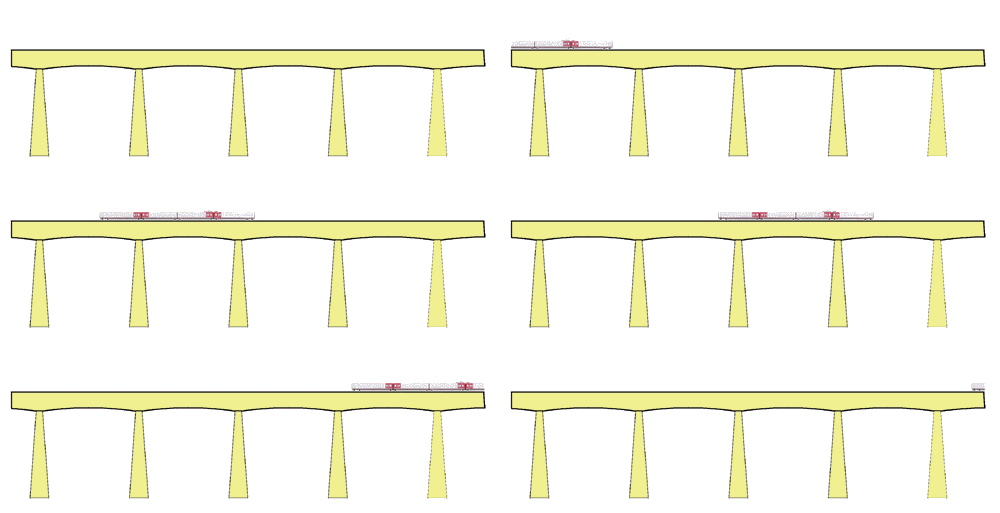
Train-Bridge Interaction
Introduction
The introduction of high speed trains in Denmark and Europe results in
larger and more complicated loads than earlier. The problem increases with
flexible and very long bridges.
High speed trains produce stronger vibrations in the bridge structure
than slower trains do, and resonance vibrations may develop and affect
the bridge. Special attention must be given to fatigue problems for the
bridge structure caused by the vibrations.
ES-Consult has developed tools which describe the movements of both
the bridge and the train during train passage. These tools can confirm
or reject any conjectures concerning vibrations produced by running
trains.
ES-Consult has at its disposal a Finite Element programme, which enables
us to determine the steel or concrete elements of a bridge that are exposed
to exceptionally large loads. When the critical elements are known, the
bridge design can subsequently be improved.
A special possibility for improving the response of a bridge against
vibrations is the arrangement of vibration dampers such as mass dampers
or hydraulic dampers.
Since train-bridge interaction is a complicated subject, it is essential
for ES-Consult to communicate knowledge about, and proposals for
solving, these problems. ES-Consult has developed a well founded report
concept, which above all focuses on the client's need for clear information
about the problem.
Example
ES-Consult has made a detailed analysis of the dynamic train load on the
8 km long Øresund bridge. The results of the analysis have been
applied in the guidelines for the design of the bridge.
As a special topic ES-Consult analysed the riding comfort of the passengers
in trains passing over the bridge. The purpose of the analysis was to achieve
the highest possible comfort level.
Research and Development
ES-Consult has specialized in other vibration topics, and several of the
staff members have many years of experience in solving vibration problems.
ES-Consult has itself developed a number of calculation tools for handling
train-bridge interaction problems, and has published several papers in
international journals.
Top
|
|